

When Should a Business Consider Renting Instead of Buying a Reefer Trailer?
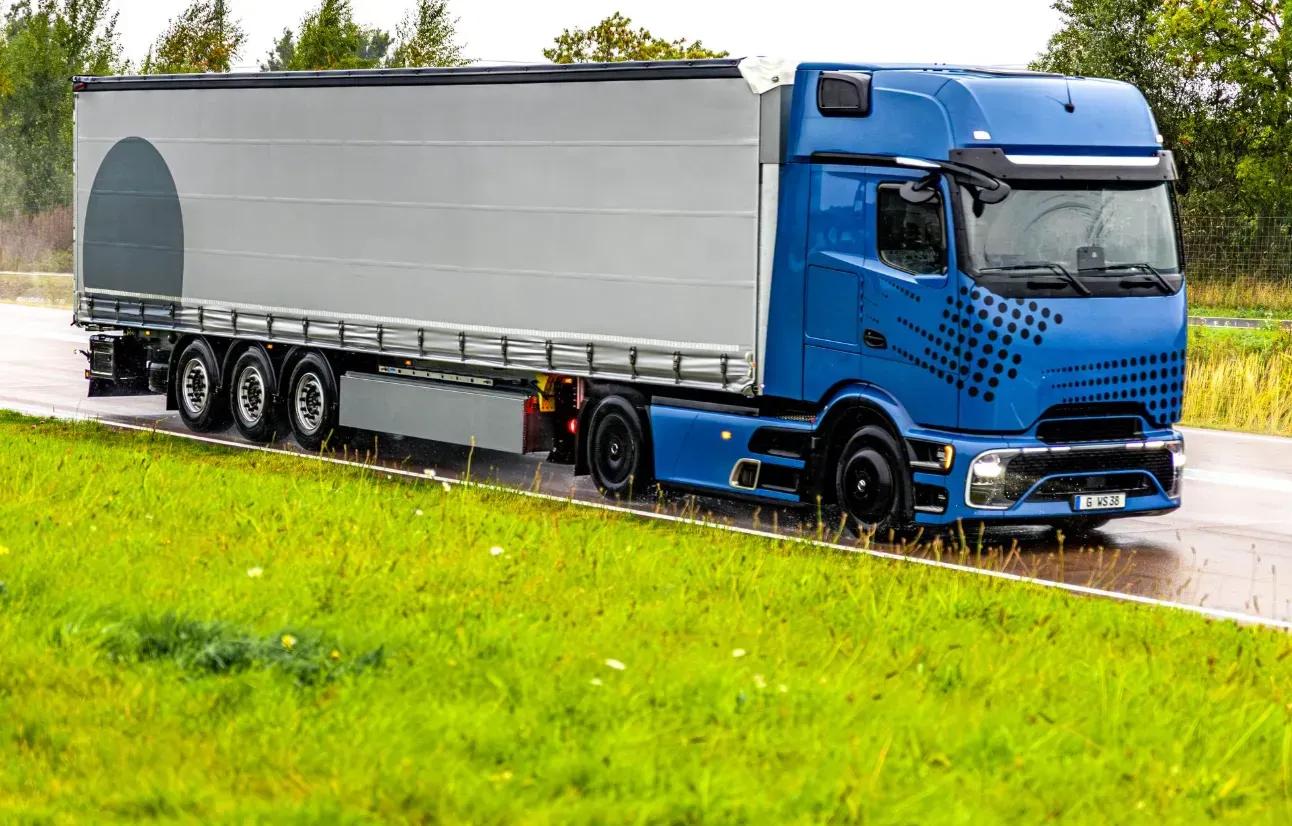
picture of a trailer
The decision to rent or buy refrigerated equipment is a capital allocation question, not just a logistics one.
Buying a reefer trailer locks up cash, creates a depreciation schedule, and adds maintenance liability to the balance sheet. Renting keeps capital available, transfers maintenance responsibility, and scales with demand. Neither option is universally correct. The right answer depends on how often you need the equipment, for how long, and what that need looks like twelve months from now.
For businesses managing seasonal demand, temporary capacity, or supply chain disruptions, reefer trailer rental gives operations teams the ability to add cold chain capacity on a timeline that matches the actual need, without the overhead of ownership.
Here is a framework for making this decision based on your specific situation.
What Is a Reefer Trailer and What Does It Cost to Own One?
A reefer trailer is a refrigerated semi-trailer used to transport temperature-sensitive cargo, including food, pharmaceuticals, chemicals, and other perishables. The refrigeration unit runs independently from the tractor, powered by its own diesel engine or shore power.
Purchasing a new reefer trailer typically costs between $80,000 and $120,000, depending on specification, size, and refrigeration unit brand. Used units in the five-to-seven-year range run $30,000 to $60,000.
Ownership costs do not stop at acquisition. Annual maintenance on a reefer unit averages $8,000 to $15,000 when refrigeration unit service, tire replacement, inspection compliance, and incidental repairs are included. Refrigeration unit overhauls, which are required periodically over a trailer's service life, add $10,000 to $20,000 when they occur.
Against that backdrop, rental rates of $1,500 to $4,000 per month look different depending on how consistently the trailer is in use.
When Does Renting Make More Financial Sense Than Buying?
Demand Is Seasonal or Cyclical
If your business requires refrigerated capacity for three to five months per year, ownership rarely makes financial sense.
A food distributor that handles holiday volume from October through January, or an agricultural operation that moves product during harvest season, pays for a trailer year-round through depreciation, insurance, and storage, even when it sits idle.
Rental aligns the cost of the asset with the period of actual use. You pay for capacity when you need it and release it when you do not.
Volume Is Unpredictable
Businesses entering a new market, testing a new product line, or managing growth without a clear demand ceiling benefit from rental flexibility.
Committing to owned equipment before demand stabilizes creates an oversupply problem if volume does not materialize, and an undersupply problem if it grows faster than planned. Rental allows capacity to track actual volume without either outcome creating stranded capital.
Capital Is Better Deployed Elsewhere
For businesses with strong growth opportunities, capital tied up in trailer ownership often generates less return than the same capital deployed into operations, inventory, or market expansion.
The rent-versus-buy analysis should include an opportunity cost comparison. If the capital required to purchase two reefer trailers could fund a new distribution center, hire a sales team, or fund inventory for a new channel, the comparison is not just between rental cost and ownership cost. It is between two different uses of the same money.
You Need a Backup Capacity Option
Even businesses that own reefer trailers use rentals to manage overflow, equipment failure, and unexpected demand.
A trailer that goes down for refrigeration unit repairs during a high-volume shipping period creates a logistics gap that rental fills. Maintaining a relationship with a rental provider gives operations teams a resource to call when owned equipment is not available or not sufficient.
According to the American Trucking Associations' equipment research, the average refrigerated trailer has a planned service life of 10 to 12 years, but unplanned downtime is a consistent reality across fleets of all sizes. Rental access is part of risk management, not just a capacity tool.
When Does Buying Make More Sense?
Ownership has a clear financial case when reefer capacity is needed year-round, volume is predictable, and the business has the operational infrastructure to manage maintenance.
If a trailer runs 45 or more weeks per year and that demand is stable across multiple years, the total cost of ownership over a seven-to-ten-year period is lower than the equivalent rental cost at market rates. The break-even point depends on rental rates, purchase price, and maintenance costs, but consistent year-round utilization generally favors ownership.
Businesses that also have dedicated maintenance staff, DOT inspection capabilities, and experience managing a fleet are better positioned to absorb the ownership responsibilities without adding overhead.
The key question is whether you have the volume to justify full asset utilization and the operational structure to manage what you own. If either answer is no, rental remains the stronger choice.
What Are the Practical Advantages of Reefer Rental Beyond Cost?
No Maintenance Responsibility
Rental trailers are maintained by the provider. Refrigeration unit service, tire management, annual inspections, and compliance documentation fall on the rental company, not your operations team.
For businesses without dedicated fleet maintenance staff, this transfer of responsibility reduces administrative overhead and eliminates the risk of compliance gaps.
Access to Current Equipment
Older reefer trailers are less fuel-efficient, more prone to temperature variance, and may not meet the specifications of customers with cold chain audit requirements.
Rental provides access to current model equipment without the depreciation exposure of ownership. Businesses in industries with strict cold chain documentation requirements benefit from using equipment that meets current specification standards.
Flexibility in Term Length
Rental agreements range from daily and weekly rates for short-term needs to month-to-month and multi-month terms for project or seasonal applications.
That flexibility lets operations managers match equipment commitments to contract lengths, project timelines, or seasonal windows without being locked into a term that outlasts the need.
What Should You Evaluate Before Signing a Rental Agreement?
Minimum Temperature Specification
Reefer trailers vary in their temperature capability. Standard units maintain 34 to 38 degrees Fahrenheit for produce and general food transport. Units carrying frozen products need to reach minus 20 degrees Fahrenheit or below. Pharmaceutical cargo often requires tighter temperature variance control than standard food transport.
Confirm that the unit being rented meets the specifications for your cargo before the agreement is signed. A unit that cannot maintain the required temperatures for your product is not a usable asset, regardless of the rental rate.
DOT Compliance and Inspection Status
Rental trailers should carry current DOT annual inspection stickers and the refrigeration unit should be serviced within the provider's maintenance schedule. Ask for documentation of the last inspection and service date.
Putting a trailer on the road with compliance gaps creates liability that falls on the operating carrier. Verify compliance before the trailer leaves the yard.
Fuel for the Refrigeration Unit
Reefer refrigeration units run on diesel fuel separate from the tractor. Clarify who is responsible for fueling the refrigeration unit under the rental agreement. Some agreements pass that cost to the renter. Others include it in the rate or handle it differently for stationary versus transport use.
Understanding this cost before signing prevents billing surprises at return.
Damage Liability and Insurance Coverage
Review the rental agreement's damage terms. Understand what damage categories you are liable for, what the deductible structure looks like, and whether your existing commercial insurance covers rental equipment.
Many commercial auto and cargo policies extend to rented trailers. Confirm your coverage with your insurance provider before taking a unit on rental, so you are not duplicating coverage or leaving a gap.
How Do You Calculate Whether Renting or Buying Is Right for Your Business?
Work through this comparison before making the decision.
Step 1: Estimate annual utilization weeks. How many weeks per year do you need a reefer trailer? Be conservative. Overestimating utilization is a common bias in buy-versus-rent analysis.
Step 2: Calculate the annual rental cost at your utilization. Multiply your estimated weeks by the applicable weekly rental rate. Add estimated fuel for the refrigeration unit if that cost passes to the renter.
Step 3: Calculate true annual cost of ownership. Acquisition cost divided by expected years of use, plus annual maintenance, insurance, registration, and storage when not in use.
Step 4: Compare over a five-year window. Both rental and ownership costs change over time. Owned equipment depreciates but requires more maintenance as it ages. Rental rates may increase but eliminate maintenance variability. A five-year comparison gives a realistic picture of total cost across a planning horizon.
Step 5: Factor in opportunity cost and operational capacity. If you do not have the staff to manage a fleet asset, add the cost of that gap to the ownership side of the comparison. If capital could be deployed at a higher return elsewhere, that differential belongs in the analysis.
Conclusion
Renting a reefer trailer is the right decision when demand is seasonal, volume is uncertain, capital is needed elsewhere, or operational infrastructure to manage fleet assets does not exist.
Buying is the right decision when year-round utilization is consistent, volume is stable, and the business has the team and systems to manage what it owns.
Most businesses fall somewhere between those two scenarios, which is why a hybrid approach, owning base capacity and renting for overflow and seasonal peaks, is common among mid-size food distributors, agricultural operations, and logistics companies.
The decision is a financial calculation. Run the numbers for your specific situation before defaulting to either option.