

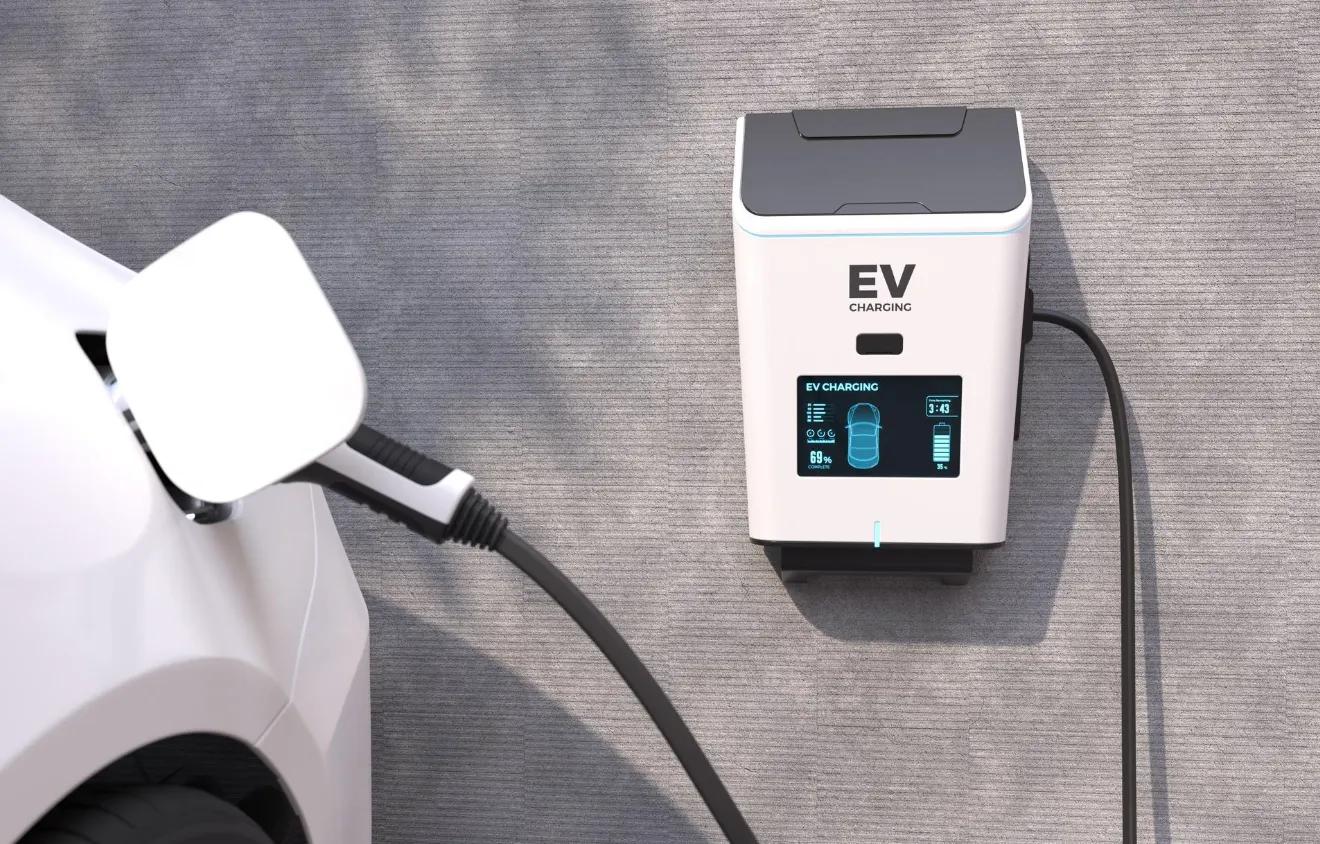
EV charging
Can an Outdated Electrical Panel Limit Your Ability to Use Modern Appliances and EVs?
You just bought an EV. Or you are eyeing a new induction cooktop. Maybe you want to add a home office setup with proper equipment, or finally get a fast EV charger installed in the garage.
Then an electrician tells you the panel cannot handle it.
This scenario plays out constantly in homes built before the 1990s. The appliances and technology available today draw significantly more power than anything that existed when most residential panels were originally sized. A panel installed decades ago was designed around the electrical demands of that era, not this one.
The gap between what your home can deliver and what modern life requires is a real limitation that affects daily convenience, energy goals, and long-term property value. For homeowners in northern Colorado, electrical Panel Replacement fort collins services are addressing exactly this upgrade cycle as EV adoption and smart home technology accelerate across the region.
Here is what an outdated panel actually restricts, and how to know whether yours is holding you back.
What Does an Electrical Panel Actually Do?
Think of the panel as the traffic controller for every circuit in your home.
It receives power from the utility, divides it into individual circuits, and distributes those circuits throughout the house. Each circuit breaker in the panel is rated for a specific amperage load. When a circuit draws more than its rated capacity, the breaker trips to prevent overheating.
The panel itself has a total service capacity, measured in amps. Older homes commonly have 100-amp service. Many have even less. Modern homes are typically wired for 200-amp service, and properties with multiple EVs, whole-home electrification, or large HVAC systems increasingly require 400-amp service.
When the demand placed on the panel approaches or exceeds its total capacity, problems begin.
Can You Charge an EV With a 100-Amp Panel?
Technically, sometimes. Practically, it creates real limitations.
A standard 120-volt Level 1 EV charger draws about 12 amps and charges at roughly three to five miles of range per hour. You can usually run this from an existing outlet on a 100-amp panel without a dedicated circuit, though it is slow.
A Level 2 home charger, the type most EV owners want, requires a dedicated 240-volt circuit rated at 40 to 60 amps. On a 100-amp panel already carrying a refrigerator, HVAC system, water heater, washer, dryer, lighting, and general outlets, adding a 50-amp dedicated circuit leaves very little headroom.
Run the EV charger simultaneously with the oven, air conditioner, and dryer, and the panel is pushed close to or past its safe operating capacity. Breakers trip. In older panels with degraded breakers, the protective mechanism may not respond reliably.
According to the U.S. Department of Energy's Alternative Fuels Data Center, Level 2 home charging equipment is the recommended solution for daily EV use, delivering 10 to 30 miles of range per hour. Installing it properly requires a dedicated circuit that a constrained 100-amp panel often cannot support without upgrades.
If you plan to own even one EV, a 200-amp panel is essentially a baseline requirement for charging without constant capacity conflicts.
What Modern Appliances Struggle on an Older Panel?
The appliance landscape has changed dramatically. Several categories draw significantly more power than their predecessors.
Induction Cooktops
A full induction range requires a 240-volt dedicated circuit rated at 40 to 50 amps. This is the same load as a large EV charger. Homes that currently have a gas range have no existing circuit for this, and adding one to a saturated 100-amp panel may not be feasible without a service upgrade.
Heat Pumps and Mini-Splits
Modern heat pumps are far more efficient than older HVAC systems, but they still draw significant amperage during startup and operation. Replacing a gas furnace with an all-electric heat pump system adds a substantial new load to the electrical service. Pairing that with an existing electric water heater, an EV charger, and full kitchen appliances on a 100-amp panel creates a scenario where the math simply does not work.
EV Charging Plus Home Battery Storage
Homeowners combining solar, battery storage, and EV charging are building systems that require thoughtful panel capacity planning. A battery system like a Tesla Powerwall or Enphase system needs a proper interconnection point on the panel. Adding this to a constrained service frequently requires not just a panel upgrade but a new service entrance.
High-Demand Home Office Equipment
Laser printers, multiple monitors, professional audio and video equipment, and dedicated server racks draw more sustained power than the average home office of the 1990s ever required. These demands are modest individually but cumulative on a panel already near capacity.
How Do You Know If Your Panel Is the Bottleneck?
Several patterns point directly to capacity constraints.
Breakers trip when multiple appliances run simultaneously. If running the oven and microwave together while the air conditioner is on causes a breaker to trip, the circuit or the overall panel is at or near its limit.
You cannot add a new circuit without removing another. An electrician who tells you there are no open slots and no way to add a circuit without reconfiguring existing ones is describing a panel that has reached its physical and electrical limits.
Your breakers are original and decades old. Breakers have a functional lifespan. Original equipment from the 1970s or 1980s that has never been replaced may no longer trip reliably at its rated threshold. A breaker that does not trip when it should is a safety concern, not just an inconvenience.
Your home has a Federal Pacific or Zinsco panel. These two brands, common in homes built between the 1950s and 1980s, have documented reliability issues with their breakers. Stab-Lok breakers in Federal Pacific panels have been associated with breaker failures and fires. If your home has either brand, evaluation and likely replacement is strongly advisable regardless of current capacity.
Your home still has 60-amp service. Some homes, particularly those built before 1960, have never been upgraded beyond 60-amp service. This is completely incompatible with modern electrical demands and represents both a capacity problem and a safety concern.
Does Panel Capacity Affect Home Value?
Yes, and increasingly so.
Buyers who are evaluating a home today are thinking about EV ownership, solar readiness, and smart home capability. A 100-amp panel signals that the home will require investment before it can support those priorities. That signal affects offers.
Real estate professionals increasingly list electrical service capacity in disclosures and marketing materials for the same reason updated kitchens and bathrooms are highlighted. Infrastructure that supports modern living has become part of the value conversation.
Home inspectors routinely flag undersized or outdated panels as a negotiating point. In competitive markets, sellers who have already upgraded the electrical service remove an objection that would otherwise reduce offers or require a credit at closing.
What Does a Panel Upgrade Actually Cost?
A standard 200-amp panel replacement runs between $1,500 and $3,500 installed, depending on the complexity of the existing service entrance, permit requirements, and whether the meter base needs updating.
Upgrading from 200-amp to 400-amp service, which is relevant for homes pursuing full electrification with multiple EVs and a battery storage system, runs $3,000 to $8,000 depending on utility coordination requirements.
These numbers reflect the electrical work alone. If the upgrade coincides with adding a Level 2 EV charger, that installation typically adds $400 to $1,200 to the project total.
Framed against the cost of the appliances and vehicles the upgrade enables, the investment is relatively modest. An EV that costs $40,000 paired with a $1,200 Level 2 charger that cannot be installed on the existing panel is a charging problem that costs very little to fix relative to the asset it serves.
Should You Upgrade the Panel Proactively or Wait?
Waiting for a problem to force the decision is the more expensive path.
Upgrading during a renovation, when walls are already open and an electrician is already on site, reduces the labor cost of the panel work. Upgrading as a standalone emergency project after a capacity-related failure or fire event is always more expensive and more disruptive.
If you are planning to purchase an EV within the next three years, add a major appliance, or add solar or battery storage, get a panel assessment now. An electrician can tell you within a single site visit whether your current service can support your plans or whether an upgrade belongs in the near-term budget.
Conclusion
An outdated electrical panel is not just an old component in a utility closet. It is an active constraint on how you can live in your home.
The technology available today, from EVs to induction cooking to whole-home battery storage, was designed around modern electrical infrastructure. Homes built before that infrastructure became standard are playing catch-up.
The upgrade path is well-defined, the costs are predictable, and the return extends across every year you continue using appliances, charging vehicles, and managing energy at home. Getting ahead of the limitation rather than discovering it mid-project is the decision that pays off most clearly.