

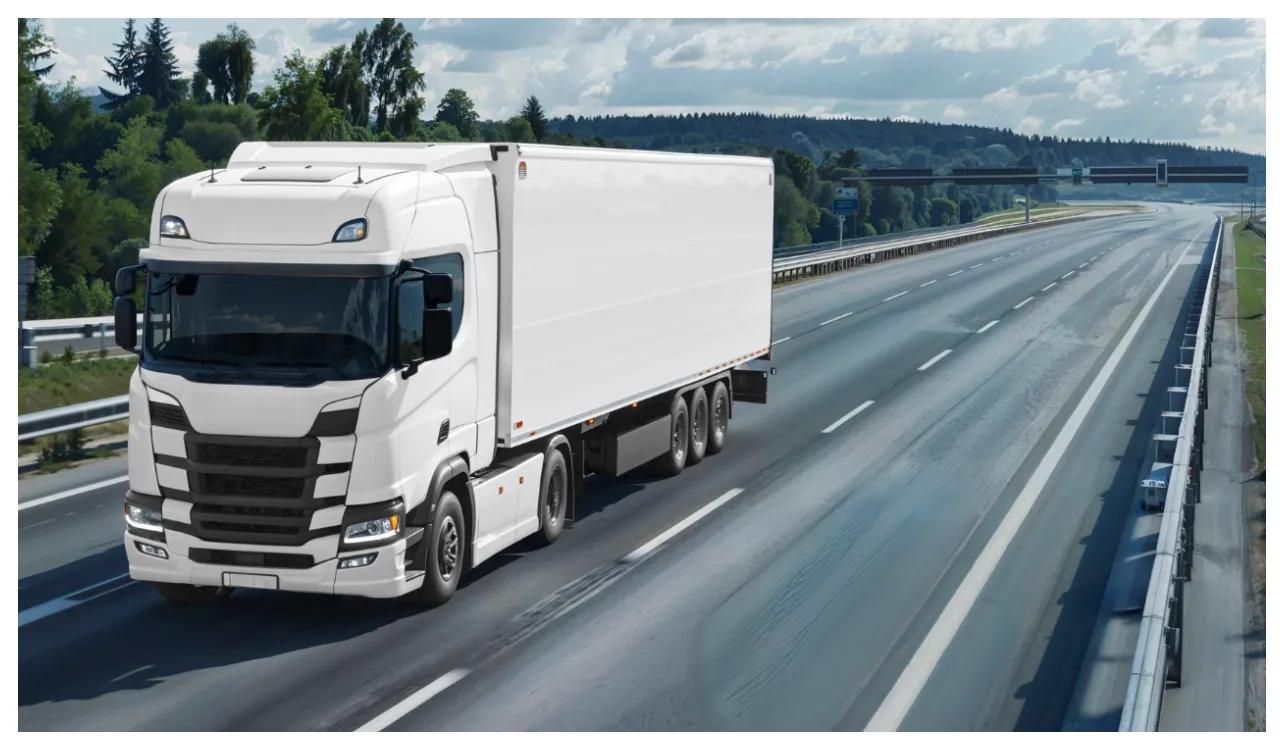
truck on high way
The driverless freight era is no longer theoretical. It is already running on Texas highways.
On January 23, 2025, Aurora Innovation launched its first fully autonomous commercial trucks on Texas roads without safety drivers. The route stretched from Palmer, Texas to South Dallas, navigating state highways and local roads as part of its initial commercial operations. Aurora set a further landmark when it removed safety drivers on the Dallas-to-Houston I-45 corridor in May 2025, following the closure of a formal safety case with FMCSA and Texas regulators. That route is one of the busiest commercial freight corridors in the United States.
For logistics companies, fleet operators, and freight businesses, autonomous trucking represents a fundamental shift in operating economics. For drivers and other road users sharing those corridors with driverless 80,000-pound vehicles, it represents an entirely new liability landscape.
When a driverless truck is involved in a crash, the legal questions are different from anything the standard insurance and claims process was built to handle. For victims injured in autonomous truck crashes on Texas roads, the Houston truck accident lawyers at Sutliff & Stout are tracking these developments closely and are prepared to pursue every available legal avenue on behalf of people injured by this emerging technology.
Where the Industry Actually Stands in 2025
The Companies Still Operating
The autonomous trucking landscape has consolidated significantly from its peak. TuSimple discontinued its U.S. operations in December 2023 and rebranded as CreateAI, pivoting to AI gaming technology. Waymo suspended its autonomous trucking division, Waymo Via, in July 2023 to focus on robotaxis. Embark laid off approximately 70 percent of its workforce and closed its Houston office.
The survivors are operating at scale. Kodiak Robotics, Gatik, Waabi, and Einride continue Level 4 testing on specific routes, while Aurora has become the clear commercial leader. FedEx and Amazon have both expanded their autonomous truck fleets significantly, with FedEx achieving cost savings exceeding $200 million annually through Aurora-powered long-haul logistics.
What Level 4 Automation Means
Autonomous trucks operate across five SAE automation levels. Most current commercial deployments operate at Level 4, meaning they can drive themselves on highways but may require human oversight in complex urban situations. Level 4 is not full autonomy. The truck handles the highway run. Human drivers or remote operators handle terminal approaches, city streets, and unusual conditions.
That partial autonomy distinction matters enormously for liability purposes. A crash that occurs during the Level 4 highway segment and a crash that occurs during a human-controlled terminal segment involve different defendants and different legal theories.
Why Texas Became the Proving Ground
Regulatory Environment
Texas has passed laws explicitly allowing autonomous vehicles to operate on public roads as long as they comply with traffic laws. This forward-leaning policy approach, combined with the state's logistics network, makes Texas an ideal testbed for companies like Aurora.
Texas does not require a human backup driver in autonomous commercial vehicles. It does not mandate real-time remote monitoring. As of now, there is no comprehensive federal law governing self-driving trucks. Congress and federal agencies are still playing catch-up. The result is a regulatory gap where the most commercially active autonomous trucking state in the country operates without specific safety standards for driverless commercial vehicles.
The I-45 Corridor Risk Profile
Commercial trucks were involved in nearly 39,000 crashes in Texas in 2023, resulting in 620 fatalities and thousands of serious injuries. Aurora's primary commercial route between Dallas and Houston runs the full length of I-45, one of Texas's most dangerous highway corridors. Houston's urban approaches, known for complex interchange geometry and high traffic density, represent exactly the conditions where Level 4 systems are most likely to encounter scenarios outside their training data.
In 2024, the United States launched its first fully autonomous freight corridor connecting major distribution hubs in Texas and California, resulting in a 25 percent reduction in transit times and 30 percent reduction in operational costs. Those efficiency numbers explain the industry's momentum. They do not address what happens when the system encounters a scenario it was not programmed for.
The Business Case: What Freight Companies Are Gaining
Cost Economics
A McKinsey 2024 TCO update found that Level 4 trucks could reduce per-mile costs by 42 percent on routes longer than 1,500 miles, despite AV hardware premiums. The primary savings come from the elimination of driver wages, which average $70,000 annually per driver. However, driverless fleets add new costs for remote operations, sensor calibration, and cybersecurity hardening, which offset roughly one-third of the wage savings.
Driver Shortage Context
The American Trucking Associations estimates a shortage of over 80,000 commercial truck drivers in 2025. While automation through autonomous trucks could fill this gap, it may also lead to significant long-term job displacement for professional truck drivers. The industry frames autonomous trucks as addressing a shortage crisis. The economic reality is that they simultaneously eliminate the jobs that create that shortage.
Platooning as a Bridge Technology
Before full Level 4 deployment, platooning is already changing freight economics. Platooning technology enables multiple trucks to operate in coordinated formations with reduced following distances and synchronized braking, promising significant fuel efficiency improvements while creating new liability scenarios when system failures cause multi-vehicle accidents. A platooning failure at highway speed involving three linked trucks produces a mass-casualty event. The liability chain in that scenario involves the fleet operator, the platooning software developer, and the lead truck's human driver simultaneously.
The Legal Liability Framework: What Changes When There Is No Driver
The Core Problem for Crash Victims
Technically, a machine cannot be sued. However, the companies responsible for the truck's design, commercial operations, and maintenance can face legal action. The question of which company faces which portion of that liability is the central legal challenge of autonomous truck crash litigation.
In a traditional commercial truck crash, liability flows through an established framework. The driver bears personal liability. The carrier bears respondeat superior liability for the driver's negligence. The maintenance contractor bears liability for mechanical failures. That framework does not transfer cleanly to a driverless truck, where there is no driver negligence to attribute.
Who the Defendants Are
A comprehensive study by the RAND Corporation identifies several potential liable parties in autonomous truck accidents: software companies developing the autonomous driving systems, hardware manufacturers producing the sensor arrays, fleet operators deploying the vehicles commercially, cargo loaders when improper loading affects vehicle behavior, and infrastructure operators when road conditions contribute to a sensor failure.
Products Liability Replaces Negligence
According to Deloitte, assessing fault for self-driven truck accidents will be a matter of product liability. That shift from negligence to product liability changes everything about how these cases are built and litigated.
In a products liability case, the plaintiff does not need to prove that any person was careless. They need to prove that the autonomous system had a defect, that the defect caused the crash, and that they were injured as a result. The defect can be a design defect in how the system was programmed to respond to a specific road condition, a manufacturing defect in a sensor component, or a failure to warn about the system's known limitations in specific weather or traffic scenarios.
Data Is the Evidence
If you are involved in a crash with an AI-operated truck, your lawyer should act quickly to demand access to digital logs, black box data, and any remote communications with the vehicle at the time of the incident.
Autonomous trucks generate vastly more crash data than human-driven vehicles. Lidar point clouds, camera recordings, radar logs, GPS track data, and the autonomous system's real-time decision records all exist at the moment of impact. That data shows exactly what the system perceived, what decision it made, and whether that decision was consistent with the system's own safety parameters.
The challenge is preservation. Not all personal injury attorneys are equipped to handle these types of claims. You will want a firm experienced in dealing with autonomous vehicles, product liability, and complex tort litigation. A legal hold notice demanding preservation of all onboard and cloud-stored system data must be sent to the autonomous trucking company within days of the crash. That data is proprietary, generated at enormous volume, and subject to automated deletion protocols unless a preservation demand stops the process.
Insurance Is Not Ready
AI is already prompting insurance carriers to rethink risk modeling. Victims of autonomous vehicle accidents may find themselves negotiating with unfamiliar or multiple insurers. Coverage disputes could become more common, especially if traditional personal injury protections do not fully apply.
The Two-Year Deadline Still Applies
Texas Civil Practice and Remedies Code Section 16.003 sets a two-year statute of limitations for personal injury claims regardless of whether the at-fault vehicle was human-driven or autonomous. The evidence preservation window is far shorter. Onboard system data may be overwritten within days. The same urgency that applies to dashcam footage in a conventional truck crash applies to the autonomous system's decision logs in a driverless crash, with even less margin for delay.
The Road Ahead
The future of trucking accident liability likely involves combined human-machine operation frameworks requiring new methods for apportioning fault based on which system controlled the vehicle at the moment of impact. Courts will need methods to evaluate whether autonomous systems made reasonable decisions, potentially requiring new categories of expert witnesses fluent in AI decision trees.
That legal evolution is coming. It is already necessary on Texas highways where Aurora's driverless trucks are operating commercially today. The businesses deploying this technology are moving faster than the regulatory frameworks designed to govern it. Until those frameworks catch up, the victims of crashes involving driverless trucks need attorneys who understand both the technology and the legal theories that apply to it.